
Trocar Button vs Suture in Embalming
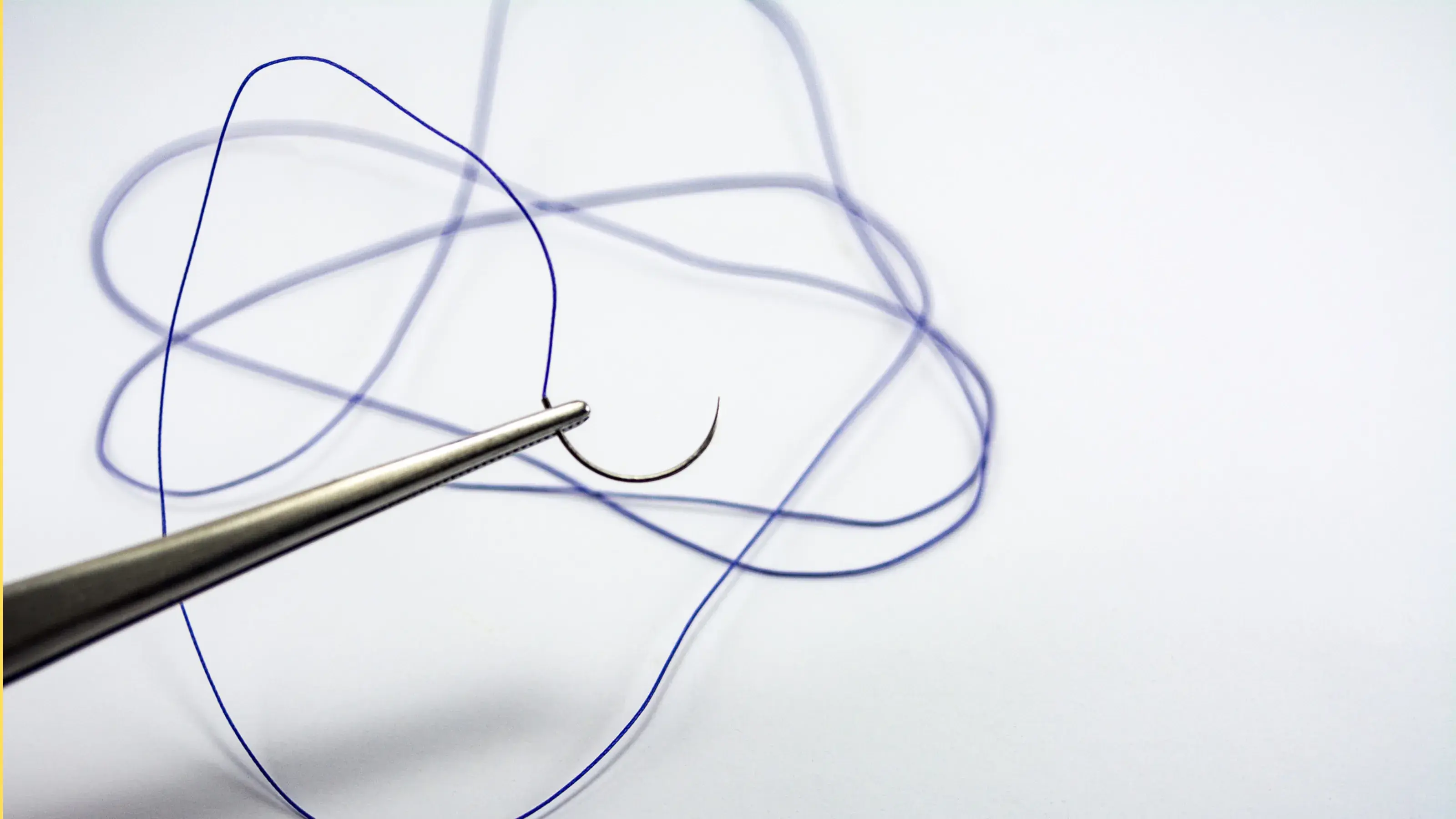
"Trocar button vs suture explained. See how each closure works, where each excels and how qualified embalmers choose between them."
The trocar button vs suture debate surfaces in mortuary circles more often than you might expect, and it recently arrived in our comments in a confident form: “Embalmers don’t use sutures for that anymore, you have to use a plastic trocar button.” It was a fair thing to raise, and it deserves a calm, practical answer rather than a defensive one. Here is our position in a sentence. Trocar buttons are a legitimate and widely used tool, sutures are an equally legitimate and older one, and a well-trained practitioner understands both and chooses between them case by case. Neither is a universal rule, and anyone who says otherwise is simplifying a craft that is more nuanced than a slogan. This article explains what each closure does, where each one shines, where each one struggles, and what families can take from it. It is written for students, practitioners and curious members of the public alike. During cavity treatment, a long hollow instrument called a trocar is used to aspirate the hollow organs and introduce cavity fluid. This leaves a small puncture in the abdominal wall, usually above the navel. That opening has to be closed securely. An unclosed or poorly closed puncture can allow fluid to seep, and seepage can stain clothing, create odour and undermine the quality of care just before a family arrives to say goodbye. Closure is a small step in a long procedure, yet it is one where a moment of carelessness becomes visible to everyone. The goal is simple. The opening should be sealed so that nothing leaves it, the surface should lie flat, and the result should be invisible to the people who matter most, the family. A trocar button is a small, threaded plastic plug. It is screwed into the puncture so that its threads grip the surrounding tissue and hold the opening shut. It is quick to apply, requires little time, and is widely taught and used. Its strengths are real: Speed. Application takes moments, which matters in busy mortuaries. Consistency. A standard device produces a predictable result for a standard puncture. Accessibility. It requires less manual dexterity than fine suturing, so it suits practitioners still building their skills. Cleanliness. The device is single use and straightforward to apply. Its limitations are equally real: Bulk. The device sits proud of the skin and can create a small bump beneath clothing. Dependence on the tissue. Threads need healthy, intact tissue to grip. If the puncture is torn, enlarged or the tissue is fragile, the button may not seat well. Risk of loosening. If it is cross-threaded or placed poorly, it may loosen or leak. Limited use. It is designed for small round punctures and is unsuitable for long incisions, drain sites or irregular openings. Often, yes, and this is why a qualified practitioner keeps the skill. A suture is a stitch placed with a needle and thread, and a trained hand can adapt it to the shape and condition of almost any opening. A suture can lie flatter than a button, which matters when a person will be viewed in clothing. It can be adjusted to the tissue in front of you, and it works on openings a plastic plug could never close. That adaptability is the practical argument for learning it properly. We would not go as far as saying that a suture is always “permanent” or “leak-proof”. Any closure is only as good as the hand that places it, the tissue it holds and the care taken afterwards. A poorly placed stitch can fail just as a poorly seated button can. It is also worth saying plainly that we are not aware of any Australian rule that requires one method over the other. Practitioners should follow the procedures of their workplace, the guidance of their training and any requirements that apply in their state or territory. Several classic stitches are taught in mortuary science. The names vary slightly between textbooks and regions, but the principles are consistent. A purse-string suture runs a continuous circle of stitches around the margin of the opening. When the thread is drawn tight, like the drawstring on a bag, the edges gather inward and close the hole. It is a favourite for round punctures because it can produce a flat closure without a plastic component sitting on the skin. Some teaching materials describe a pattern where the needle passes across the opening in the shape of the letter N or Z, pulling the edges together. It suits small punctures and drain openings, though the name and exact pattern may differ from one text to another, so students should follow the technique taught in their course. The baseball stitch, so called because the stitches resemble the lacing on a baseball, is a staple of mortuary closure. It draws the edges of a longer incision together from underneath, and it is commonly used for long incisions where a button is simply not an option. An intradermal, or subcuticular, suture is worked within the deeper layer of the skin so that no thread appears on the surface. It is used where an incision may be visible to the family, such as on the neck, because it leaves a neat, discreet line. Each of these takes practice. The point is not to collect techniques as trophies, but to have the right one available when a case calls for it. Experienced practitioners tend to weigh a few practical questions before choosing: How large and what shape is the opening? Small and round may suit a button, while irregular or long openings call for stitches. What is the condition of the tissue? Fragile or compromised tissue may not hold threads reliably. Will the person be viewed, and in what clothing? A flatter closure may matter more where there will be a viewing. Is there any risk of leakage? Cases with more moisture or pressure may need extra care and sometimes more than one safeguard. What do workplace procedures and training require? These come first. A confident practitioner does not treat the choice as a matter of pride or fashion. It is a clinical judgement, made for the benefit of the person in their care. Yes, and we would encourage it. The public, and especially students, are entitled to ask why a mortuary does something a particular way. Questions keep a profession honest, and a good practitioner can answer them without condescension. The risk lies elsewhere. Short videos reward confident, absolute statements, and “you have to use this” travels further than “it depends”. Craft knowledge rarely fits into a caption. When we see a firm rule online, we find it helpful to ask who set the rule, where it applies and what evidence supports it. Equally, practitioners should resist the temptation to answer certainty with more certainty. Our claim is not that buttons are poor or that sutures are superior in every case. It is that skill, judgement and adaptability make the difference, and that a practitioner who can only do one thing has fewer options when a case turns out to be difficult. Families are rarely told which closure was used, and they should not need to be. What they need is confidence that their loved one has been cared for by people who take quiet details seriously. That care supports every kind of farewell. A Private Viewing & Cremation gives family a private moment together, and thoughtful preparation helps that moment feel peaceful. An Attending Service & Cremation lets friends and relatives gather to farewell someone with dignity, while a No Service Cremation suits families who prefer a simpler arrangement. If you would like to understand the differences before you decide, you can compare all Black Tulip Funerals packages or speak with our team at any time. Are trocar buttons unprofessional? Do embalmers still use sutures? Is a suture always more secure than a button? Is one method required by law in Australia? Will the family ever see the closure? The trocar button vs suture question is a good example of how craft works. The best answer is rarely “always this” or “never that”. It is a considered choice made by someone who understands the tissue, the tools and the purpose. Plastic buttons have their place, and so does a needle and thread. What matters is that the practitioner can do both well, explain why they chose one, and remain open to learning from anyone, including a curious visitor. At Black Tulip Funerals, we believe that dignity lives in details families may never see. Careful hands, honest practice and respect for every person in our care are what turn a procedure into a farewell worth trusting.Trocar Button vs Suture and Which Closure a Qualified Embalmer Should Choose
Why Does Closing a Trocar Puncture Matter at All?
How Does a Trocar Button Work?
Is a Suture Ever Better Than a Button?
Trocar Button vs Suture at a Glance
Which Suture Techniques Do Embalmers Use?
The Purse-String Suture
The N or Z Suture
The Baseball Suture
The Intradermal Suture
How Do You Choose Between the Two?
Is It Fair for Visitors to Challenge Practitioners?
How Does This Matter to Families?
Frequently Asked Questions
No. They are a standard, widely taught tool and a sensible choice for many cases. The concern is relying on one method alone when a case calls for another.
Yes. Sutures remain an important part of mortuary practice, particularly for longer incisions, irregular openings and areas where a discreet finish matters.
Not automatically. Security depends on technique, tissue condition and care. A poorly placed suture can fail, and a well-seated button can hold perfectly well.
We are not aware of a rule that mandates one over the other. Practitioners should follow their workplace procedures, their training and any requirements that apply in their state or territory.
Not if it has been done well. Thoughtful closure and dressing are designed so that nothing is visible.Moving Forward With Skill and Good Judgement