
Funeral Program Template for a Meaningful Service
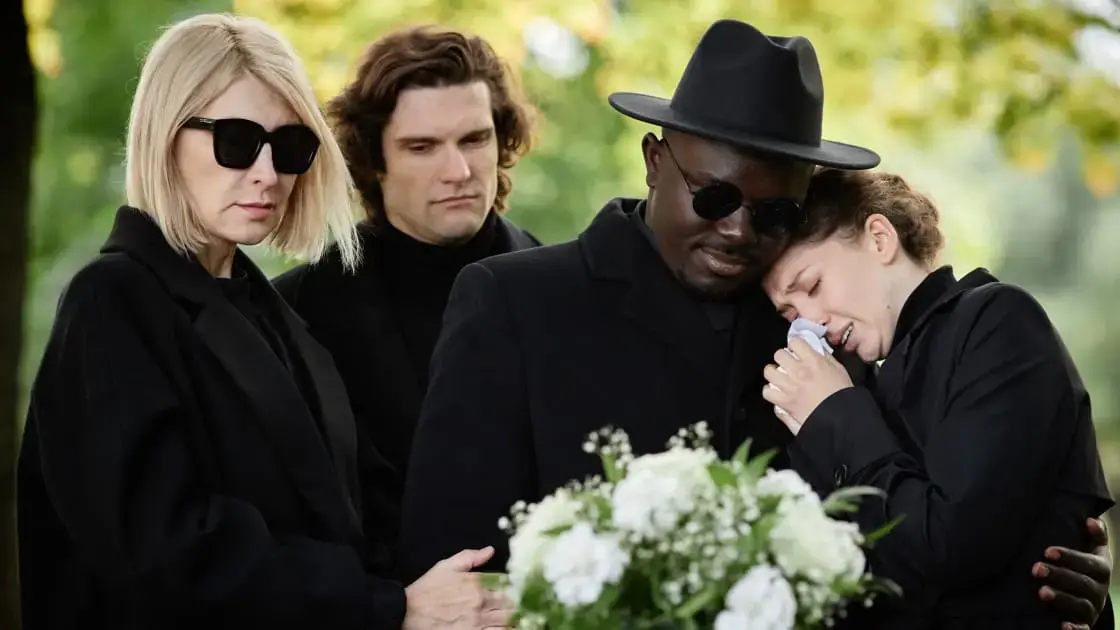
"Planning a service? Use our guide and funeral program template to create a beautiful, structured order of service that honours your loved one's memory."
Planning a funeral involves many emotional and practical decisions, often made while a family is grieving. Creating the funeral program may feel like one more difficult task, but a clear funeral program template can make the process more manageable.
A funeral program does not need elaborate wording or complex design. Its main purposes are to guide guests through the service, acknowledge the people taking part and create a meaningful keepsake.
This guide includes a copy-and-edit four-page template, a suggested order of service, wording examples and a final checklist for printing or digital sharing.
What Is a Funeral Program?
A funeral program is a printed or digital document that outlines what will happen during a funeral, memorial or celebration-of-life service.
It may include:
The deceased person’s full name
A photograph
Dates of birth and death
Service date, time and location
The order of service
Names of speakers and contributors
Music, readings and prayers
A short obituary or life summary
Family acknowledgements
Wake or reception information
Donation, flower or memorial instructions
Guests can use the program to follow the ceremony. Many also keep it afterwards as a personal reminder of the person being honoured.
Funeral Program, Order of Service or Memorial Booklet?
These terms are sometimes used interchangeably, but they can have slightly different meanings.
A funeral program usually provides a concise outline of the ceremony and essential information.
An order of service focuses more specifically on the sequence of music, readings, tributes, prayers and other elements.
A memorial booklet may be longer and include photographs, an obituary, written tributes, poems and family history in addition to the service order.
Your document can perform all three functions. The appropriate length depends on the ceremony, available preparation time and how much personal material the family wants to include.
Information to Gather Before You Begin
Collecting the content first makes layout and proofreading much easier.
Confirm:
The deceased person’s preferred full name
Correct spelling of all names
Date of birth and date of death
Service date and starting time
Venue name and address
Celebrant, clergy member or service leader
Names of speakers, readers, musicians and pallbearers
Final music selections
Titles and authors of readings or poems
Wake or reception details
Livestream information, if appropriate
Charity or memorial-donation details
Family thank-you wording
Photographs approved for use
Ask each contributor to confirm how their name and role should appear. Small spelling errors can become upsetting when printed across many copies.
Copy-and-Use Four-Page Funeral Program Template
The following funeral program template is designed for a single sheet folded into an A5-style four-page booklet. Replace the bracketed information with your own details.
Page 1: Front Cover
In Loving Memory of
[Full Name of the Deceased]
[Preferred photograph]
[Date of Birth] – [Date of Death]
[Day and date of service]
[Time]
[Venue name]
[Optional short quotation, phrase or line of remembrance]
Examples include:
Forever loved and always remembered
A beautiful life, lovingly remembered
In our hearts, always
Celebrating a life of love, kindness and connection
The cover should remain simple. One strong photograph and a small amount of text usually create a more respectful and readable result than a crowded design.
Page 2: Opening and First Part of the Service
Order of Service
Prelude or Arrival Music
[Song title] – [Artist, musician or performer]
Welcome and Opening Words
[Name of celebrant, clergy member or service leader]
Opening Prayer, Reflection or Moment of Silence
[Title or brief description]
[Name of reader, if applicable]
Reading or Poem
[Title] by [Author]
Read by [Name and relationship]
Life Story or Obituary
Presented by [Name]
For a non-religious service, the prayer section can be replaced with a welcome, reflection, personal quotation or moment of silence.
Page 3: Tributes and Closing
Eulogy
Delivered by [Name and relationship]
Family and Friend Tributes
[Names of speakers]
Photographic Reflection
[Song title] – [Artist]
Cultural or Religious Observance
[Description and contributor]
Final Words or Committal
Led by [Name]
Closing Music or Recessional
[Song title] – [Artist, musician or performer]
The eulogy is often placed near the centre of the service, after the welcome and an opening reading. For more guidance, see When Is a Eulogy Read at a Funeral?.
The sequence can be changed to reflect the family’s wishes, the venue, religious requirements and cultural traditions.
Page 4: Acknowledgements and Practical Details
With Gratitude
The family of [Name] sincerely thanks everyone who has offered love, support, messages, flowers and practical assistance during this difficult time.
Your presence today and the memories you have shared are deeply appreciated.
Following the Service
Family and friends are warmly invited to join us for refreshments at:
[Venue name]
[Address]
[Approximate time]
Optional Memorial Message
In lieu of flowers, donations may be made to [charity or organisation].
[Donation URL or QR code]
Funeral arrangements by:
[Funeral provider]
[Contact details, if appropriate]
A final photograph, signature phrase or short family message may also be placed on the back cover.
Example of a Simple Funeral Order of Service
Not every service needs every element. A simple order may include:
Arrival music
Welcome and introduction
Opening reflection or prayer
Reading or poem
Life tribute
Eulogy
Personal tributes
Photographic slideshow
Moment of reflection
Final farewell or committal
Closing words
Recessional music
A smaller service might include only welcome words, one tribute, a favourite song, a moment of reflection and a closing farewell.
Religious and cultural services may follow a prescribed sequence. Before finalising the program, confirm the structure with the celebrant, clergy member, community elder or funeral director.
Expanded Funeral Booklet Template
A four-page program may not provide enough space where the family wants to include more photographs or written material.
An eight-page memorial booklet might follow this structure:
Page 1: Cover
Page 2: Short life summary or obituary
Pages 3–4: Order of service
Page 5: Eulogy or family tribute
Page 6: Poem, prayer or reading
Page 7: Photographs and personal memories
Page 8: Family acknowledgement, reception and donation details
Longer booklets may include a timeline, family tree, favourite recipes, messages from grandchildren or photographs representing different stages of life.
The program should still remain easy to follow during the ceremony. If there is extensive memorial content, keep the actual order of service clearly labelled.
Wording Examples for a Funeral Program
Families often find the acknowledgement and closing message more difficult to write than the service outline. These examples can be adapted.
Traditional acknowledgement
The family sincerely thanks you for your presence, kindness and support. Your expressions of sympathy have brought comfort during this difficult time.
Warm and personal acknowledgement
Thank you for joining us to remember and celebrate [Name]. Your stories, messages and support remind us how deeply [he/she/they] was loved.
Celebration-of-life wording
Today, we gather not only to say goodbye but to celebrate the memories, laughter and love that [Name] shared so generously.
Memorial-donation wording
In lieu of flowers, the family invites those who wish to make a donation to [organisation], in recognition of a cause close to [Name]’s heart.
Private reception wording
A private family gathering will follow the service. Thank you for understanding and for respecting the family’s wishes.
Livestream wording
For family and friends unable to attend in person, the service will be available by private livestream.
[QR code or access instructions]
Avoid printing a private password in programs that will be posted publicly online.
Choosing Music, Readings and Photographs
The most meaningful choices usually reflect the person’s character rather than what is considered traditionally appropriate.
Consider:
Music they listened to often
A poem that reflects their values
A reading connected to their faith or culture
Photographs showing relationships and everyday life
Words or expressions they regularly used
A quotation that captures their outlook
Music can be included during arrival, reflection, a slideshow, the committal or departure. Families planning a secular service can explore Non-Religious Funeral Songs to Honour Loved Ones.
List the title and artist or performer accurately in the program.
Copyright and Permission Considerations
Song titles, reading titles and contributor credits can be listed without reproducing the entire work.
However, poems, full song lyrics, artwork and professional photographs may be protected by copyright. Before reproducing them in printed or digital programs, check whether:
The work is in the public domain
The family owns the photograph
The photographer has granted permission
The venue or funeral provider holds an applicable licence
Separate permission is required for printed reproduction
The author or copyright owner requires a credit
Do not assume that material found online is free to copy. Where permission is uncertain, list the title and creator instead of reproducing the complete work.
Funeral Program Design Tips
A meaningful program does not need decorative complexity. Readability should come first.
Helpful design choices include:
Use a body font of approximately 11–12 points or larger
Choose high contrast between text and background
Reserve decorative script fonts for short headings
Avoid placing text over a busy photograph
Use consistent heading sizes and spacing
Leave enough white space between sections
Use no more than two or three fonts
Align names, song titles and roles consistently
Keep important service information easy to find
Muted colours, floral details or personal motifs can create warmth, but they are not compulsory. A black-and-white program can be equally meaningful.
Consider whether elderly guests or people with reduced vision will be able to read the chosen font size and colour contrast comfortably.
Choosing and Preparing Photographs
A front-cover image should be:
Clear and in focus
Large enough for printing
Respectful and representative of the person
Free from distracting cropping or background details
Approved by the immediate family
A recent photograph is not required. Families may choose an image that best reflects how they remember the person.
For additional pages, use photographs from different stages of life. Captioning every image is optional, but names or dates may help future generations understand their significance.
Ask the printer about image-resolution and file-format requirements before finalising the design.
Printed or Digital Funeral Programs
Both printed and digital programs can be appropriate.
Printed programs
Printed copies:
Give guests something physical to follow
Provide a lasting keepsake
Are accessible without a phone or internet connection
Can be displayed alongside photographs and flowers
Estimate expected attendance and print a small number of additional copies for unexpected guests and family members who cannot attend.
Digital programs
Digital versions:
Can be shared with relatives who live elsewhere
Allow some last-minute corrections
Can include clickable links
Reduce the number of printed copies required
May be accessed through a QR code
Before sharing publicly, remove private residential addresses, personal telephone numbers, livestream passwords and any information the family does not want circulated beyond invited guests.
A digital document should also be checked on both mobile and desktop screens.
Final Proofreading Checklist
Before approving the funeral program, confirm:
The deceased person’s name is spelled correctly
Birth and death dates are accurate
The service date, time and venue are correct
Speaker and contributor names are confirmed
Music titles and artist names are accurate
Readings and poems have correct titles and credits
The order matches the celebrant’s final running sheet
Reception details are correct
URLs and QR codes work
Copyright or photo permissions have been considered
Page order remains correct when folded
The program is readable in the printed size
At least two family members have reviewed the final proof
Print one physical sample before approving the full quantity. A design that looks clear on a large computer screen may appear very different when folded and printed.
Keep the Program Flexible Until the Service Is Confirmed
Avoid sending the program to print while speakers, music or service timings are still changing.
Confirm the final running order with:
The funeral director
Celebrant or clergy member
Venue
Musicians
Audio-visual provider
Family speakers
Set a clear deadline for changes. Late edits increase the risk of spelling mistakes, incorrect page order or differences between the printed program and the ceremony.
For a broader planning checklist, see 12 Essential Steps to Plan a Funeral.
How Black Tulip Funerals Can Help
At Black Tulip Funerals, we understand that preparing a program can feel difficult when emotions are raw and decisions must be made quickly.
Our team can help families:
Clarify the order of service
Coordinate program details with the ceremony
Review names, music and contributors
Discuss wording and layout ideas
Create a farewell that reflects personal, cultural or religious preferences
The goal is not to force every family into the same format. It is to provide enough structure for the service to feel calm, clear and personal.