
When Is a Eulogy Read at a Funeral? Timing and Traditions Explained
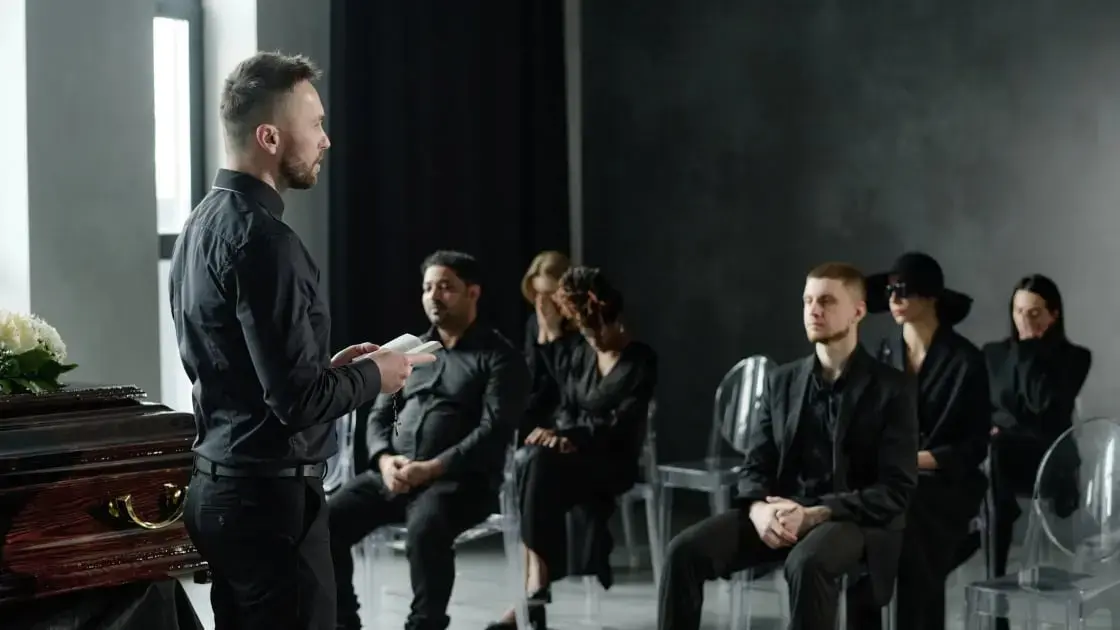
"A practical guide to placing a eulogy within a funeral, understanding religious differences and planning enough time for speakers, music and reflection."
Families often ask, “When is a eulogy read at a funeral?” In a secular ceremony, it commonly follows the welcome and opening reflections, before the final farewell. Religious services may place personal remembrance elsewhere or follow specific rules.
The right timing depends on the ceremony, its available time and the people speaking. Agreeing on these details with the celebrant or clergy beforehand gives the speaker a clear place in the service and helps everyone understand what comes next.
Where Does the Eulogy Fit Within the Service?
A eulogy remembers the person through their relationships, character and experiences. It gives those gathered an opportunity to hear familiar stories and discover parts of a life they may not have known.
In a secular service, placing it after the welcome gives guests time to settle before the main personal tribute. Music, a reading or a period of quiet reflection can follow.
There is flexibility in a humanist ceremony. Humanists UK’s example funeral structure places the tribute after introductory elements and before readings and reflection, while explaining that the sequence can be adapted. This is an example rather than a rule for Australian funerals.
For your own arrangements, begin with the service format. Ask the person leading it where the eulogy belongs before choosing the surrounding music or printing a programme.
An Example of a Secular Funeral Order of Service
A written funeral order of service helps connect the eulogy with the rest of the ceremony. It also tells speakers when to prepare and gives the person managing music a clear sequence.
The following is an illustrative arrangement for a secular farewell. It should be adjusted to the family’s wishes and the venue’s available time.
A family might prefer the reading after the eulogy, or place a photographic tribute before it. Discuss these choices together so each element has a purpose.
For help preparing the printed programme, Black Tulip Funerals’ guide to funeral order of service booklets explains how to present the sequence and identify the people taking part.
When Are Personal Tributes Given at Religious Funerals?
Religious ceremonies need their own planning conversation. A secular running order should not be used as a template for a liturgy without checking with the clergy.
Catholic funerals in Sydney
A Catholic homily and a family tribute have different purposes. The homily reflects on the scripture readings; personal remembrance does not replace it.
The Catholic Archdiocese of Sydney’s guidelines for speaking in remembrance of the dead place words of remembrance after the Prayer after Communion and before the Final Commendation at a Funeral Mass. For a funeral liturgy outside Mass, the guidance places them after the Lord’s Prayer and before the Final Commendation.
The guidelines ordinarily provide for one speaker and a brief reflection of three to five minutes. Confirm the arrangements with the priest before preparing the programme, including whether further stories would be better shared at the vigil or gathering afterwards.
Other religious and cultural ceremonies
Ask the relevant religious or community leader whether a personal tribute forms part of the ceremony, who may deliver it and where it belongs.
If family members would like additional time for storytelling, discuss a separate opportunity at the wake or memorial gathering. This lets the family plan personal contributions around the ceremony’s requirements.
How Long Should a Eulogy Be?
Start with the time allocated by the person leading the service. The available space may differ considerably between a short chapel farewell, a religious ceremony and a separate memorial.
If no duration has been agreed, ask whether three to five minutes would fit. Treat that as a starting point for discussion, rather than a universal limit.
Read the draft aloud and time it at a comfortable pace. Include pauses between stories and allow room to breathe. A speech that fits when read silently may take longer when spoken.
If it runs over, choose which memories matter most. Removing a repeated detail or a lengthy list of dates is usually more comfortable than trying to speak faster.
Keep a longer written version if you wish. It can be shared privately with family members who would appreciate the additional memories.
Can More Than One Person Give a Eulogy?
Where the ceremony permits several speakers, agree on the total speaking time before inviting individual contributions.
One option is a main eulogy followed by shorter tributes. For example, a family could propose a five-minute life reflection and two contributions of two minutes each. That creates nine minutes of speaking before introductions, movement and pauses are added.
Give each speaker a different focus:
A relative might remember family life.
A friend might share a story about their friendship.
A colleague might describe the person’s influence at work.
This helps avoid several people repeating the same biography.
Make invitations specific. Someone asked to share “a few words” may prepare a much longer contribution than the family intended. A clear duration is kinder to the speaker and easier to accommodate.
If spontaneous contributions are important, arrange them with the officiant beforehand and decide how they will fit.
Planning Smooth Transitions Before and After the Eulogy
Thoughtful eulogy timing includes the moments around the speech. The speaker needs to know how they will be introduced, where to stand and what happens when they finish.
A simple introduction could be:
“We now invite Alex to share some memories of their father, Michael.”
Afterwards, the celebrant might say:
“Thank you, Alex. We will now listen to a piece of music Michael loved.”
These examples can be adapted to the family’s language and relationships. Brief introductions are usually enough; the eulogy itself carries the personal detail.
Agree on whether music starts immediately after the speaker finishes or after the celebrant returns. If a slideshow follows, check that the person operating it knows the cue.
Avoid relying on a speaker to manage their own microphone, music and photographs while delivering an emotional tribute. Allocate those tasks beforehand wherever possible.
What If the Speaker Becomes Emotional?
Build a backup arrangement into the plan. Give a copy of the eulogy to the celebrant or another trusted person and agree on how they can help.
The speaker might pause, take a sip of water, continue from a marked paragraph or ask someone else to finish. There is no need to apologise for needing a moment.
For the printed copy, use a readable font, numbered pages and clear paragraph breaks. Marking the final sentence can also help the person leading the service recognise when the tribute has finished.
A speaker who feels unable to take part on the day can still have their words shared by someone else. Discussing that possibility early removes one decision from an already difficult moment.
Can a Eulogy Be Shared After Cremation?
A personal tribute can be planned for a separate memorial or family gathering. The family can choose a point in that gathering when everyone is present and ready to listen, rather than leaving the speech to happen unexpectedly.
Black Tulip Funerals offers an Attending Service & Cremation package for families who want an attended farewell. Discuss the available ceremony time and how a eulogy could fit when confirming the arrangements.
Its No Service Cremation package is unattended and includes neither a formal service nor a viewing. Families can arrange a separate remembrance afterwards and include a eulogy there if they wish.
When recording preferences in advance, note who you would like invited to speak and whether you prefer a short tribute or several contributions. The BTF funeral planning checklist provides a place to begin considering the wider arrangements.
What to Confirm Before the Day
Before the programme is finalised, check these details with the celebrant, clergy or funeral director:
Where the eulogy appears in the agreed sequence.
Who will introduce each speaker.
How much time each contribution has.
Who holds a backup copy.
Which music, reading or action follows.
How much venue time is available for the ceremony itself.
Ask whether the booking also needs to accommodate guests entering and leaving. Confirming usable ceremony time helps avoid fitting too many contributions into a shorter period.
Knowing when a eulogy is read at a funeral gives the speaker a clear place to begin. Once the sequence and support are agreed, they can concentrate on the memories they want to share and the person those memories honour.