
Order of Service for a Catholic Funeral: Step-by-Step Guide
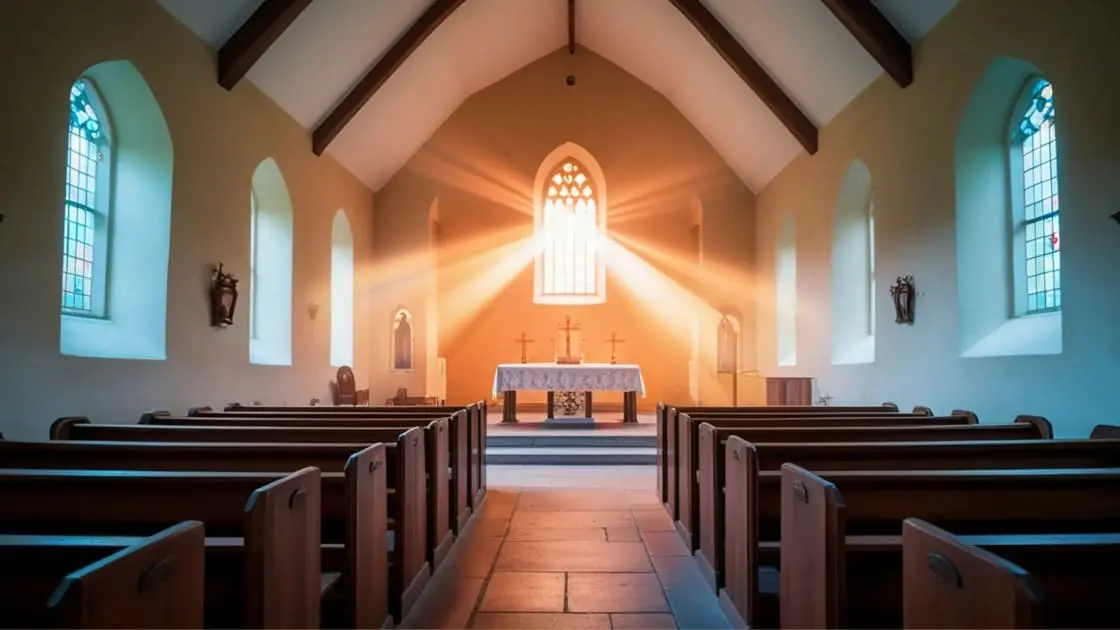
"Understand the complete order of a Catholic funeral, from the Vigil and Funeral Liturgy to the Final Commendation and Rite of Committal."
The Order of Service for a Catholic Funeral normally follows three principal stages: the Vigil, the Funeral Liturgy and the Rite of Committal. Together, these rites allow the Catholic community to pray for the deceased, support those who are grieving and express hope in the resurrection.
Within this wider structure, the Funeral Liturgy may be celebrated as a Funeral Mass or as a Funeral Liturgy outside Mass. The exact arrangements can vary according to the parish, the circumstances of the death and the family’s pastoral needs.
Speaking with the parish priest before preparing readings, music, tributes or a printed program is therefore essential.
Order of Service for a Catholic Funeral at a Glance
The complete Catholic funeral process generally follows this sequence:
Vigil for the Deceased
Reception of the Body
Introductory Rites
Liturgy of the Word
Homily
Universal Prayer
Liturgy of the Eucharist, when Mass is celebrated
Holy Communion, when Mass is celebrated
Final Commendation
Procession from the church
Rite of Committal
Burial or interment
Not every Catholic funeral will include every optional element. The priest and parish funeral coordinator will explain what applies in the particular circumstances.
The Three Principal Catholic Funeral Rites
A Catholic funeral is more than the ceremony held in the church. The Church’s funeral tradition provides three connected rites, each serving a distinct purpose.
1. The Vigil
The Vigil is normally held before the Funeral Liturgy. It may take place at:
A funeral home
A church or chapel
The family home
Another appropriate gathering place
2. The Funeral Liturgy
The Funeral Liturgy is the central public celebration for the deceased. It may be:
A Funeral Mass with the Eucharist
A Funeral Liturgy outside Mass
3. The Rite of Committal
The Rite of Committal is celebrated at the final place of burial or interment, such as:
A graveside
A mausoleum
A crypt
A columbarium
Another approved place of interment
Understanding these three stages helps families plan the complete Catholic funeral rather than treating the church ceremony as the only rite.
Stage One: The Vigil for the Deceased
The Vigil allows family members, friends and the Catholic community to gather in prayer before the main Funeral Liturgy.
It may include:
An opening hymn
Scripture readings
A responsorial psalm
A reflection
Intercessory prayers
The Lord’s Prayer
A concluding blessing
A short remembrance of the deceased
In some Catholic communities, the Rosary may be prayed before or after the formal Vigil service.
The Vigil may also provide a more suitable setting for personal stories, photographs, secular music and extended tributes that may not form part of the Funeral Mass.
The parish should confirm the permitted format before the family prepares the service.
Stage Two: The Catholic Funeral Liturgy
The Funeral Liturgy is the central liturgical celebration of the Catholic funeral rites.
Its focus is not solely on remembering the person’s life. It is an act of Catholic worship in which the Church:
Gives praise and thanks to God
Proclaims Christ’s death and resurrection
Prays for the deceased
Entrusts the deceased to God’s mercy
Supports the bereaved through Scripture and prayer
A Funeral Mass includes the Eucharist. A Funeral Liturgy outside Mass follows a similar pattern of Scripture, prayer and final farewell but does not include the consecration or Holy Communion.
Funeral Mass or Funeral Liturgy Outside Mass?
A Catholic funeral does not always include Mass.
Funeral Mass
A Funeral Mass includes:
Introductory Rites
Liturgy of the Word
Liturgy of the Eucharist
Holy Communion
Final Commendation
Mass is ordinarily celebrated by a priest.
Funeral Liturgy Outside Mass
A Funeral Liturgy outside Mass normally includes:
Introductory Rites
Liturgy of the Word
Homily
Universal Prayer
Lord’s Prayer
Final Commendation
It does not include:
Consecration of bread and wine
Eucharistic Prayer
Holy Communion as part of the service
A liturgy outside Mass may be chosen because of pastoral circumstances, parish availability, the religious background of those attending or other practical considerations.
The parish priest should advise which form is most appropriate.
Step-by-Step Order of a Catholic Funeral Mass
Step 1: Reception of the Body
The priest may meet the coffin at the entrance of the church.
The reception commonly includes:
A greeting
Sprinkling the coffin with holy water
Placement of the funeral pall
A procession into the church
Holy water recalls the person’s baptism into the Catholic faith.
The funeral pall is a large cloth placed over the coffin. It also recalls baptism and represents the equal dignity of all Christians before God.
Christian symbols, such as a Bible or crucifix, may be placed on or near the coffin according to the approved rite and parish practice.
The use and placement of flowers, photographs, flags and personal objects should be discussed with the parish beforehand.
Step 2: Entrance Procession
The coffin is brought into the church as the priest, ministers and congregation take their places.
An approved entrance hymn may be sung during the procession.
Family members may walk behind the coffin or take their seats before the procession, depending on parish arrangements and personal preference.
The priest then leads the opening prayer, gathering the community in faith and remembrance.
Step 3: Liturgy of the Word
The Liturgy of the Word proclaims Scripture passages connected with Christian hope, eternal life, mercy and resurrection.
Depending on the approved arrangement, it may include:
A first Scripture reading
A responsorial psalm
A second reading
A Gospel acclamation
A Gospel reading
The Gospel is proclaimed by the priest or deacon.
Family members or friends may be invited to proclaim some of the other readings, but they should be comfortable reading publicly and should receive the approved text from the parish.
Readings at a Catholic Funeral Mass ordinarily come from Scripture. Poems, personal letters and secular readings may be more suitable for the Vigil, wake, reception or another gathering.
Step 4: The Homily
After the Gospel, the priest or deacon delivers the homily.
The homily explains the Scripture readings and reflects on Christian faith in the context of death, grief and resurrection.
It may acknowledge aspects of the deceased’s life, but it is not the same as a eulogy. Catholic teaching directs the homily towards the mystery of Christian death and hope in the risen Christ.
Families can provide the priest with personal information about the deceased to help place the homily within the family’s circumstances.
Step 5: Universal Prayer
The Universal Prayer, also known as the Prayers of the Faithful, follows the homily.
These prayers may include intentions for:
The deceased
Family members and friends
People experiencing grief
Those who cared for the deceased
All who have died
The Church and wider community
A family member or another nominated person may be invited to read the intercessions.
The wording must normally follow an approved liturgical form or be reviewed by the priest.
Step 6: Preparation of the Gifts
When the funeral is celebrated within Mass, the Liturgy of the Eucharist begins with the preparation of the altar and gifts.
Bread and wine are brought forward for the Eucharistic celebration. Family members may be invited to participate in the procession of gifts.
The bread and wine used for Mass are liturgical gifts. Personal belongings, photographs or symbolic objects are not substitutes for them.
The parish will explain who may take part and what is appropriate.
Step 7: Eucharistic Prayer
The priest leads the Eucharistic Prayer, during which the bread and wine are consecrated.
This part of the Mass includes:
The Preface
Holy, Holy, Holy
The Eucharistic Prayer
Memorial Acclamation
Great Amen
The congregation generally stands or kneels according to local Catholic practice.
Guests unfamiliar with the responses can follow the congregation or use the printed order-of-service booklet.
Step 8: The Lord’s Prayer and Sign of Peace
After the Eucharistic Prayer, the congregation prays the Lord’s Prayer.
The priest may then invite the congregation to exchange a sign of peace.
The gesture is normally simple and restrained, such as a handshake, nod or quiet expression of peace to nearby attendees.
Step 9: Holy Communion
Catholics who are properly disposed may come forward to receive Holy Communion.
Guests who are not receiving Communion may remain respectfully in their seats or pews. Some parishes may provide particular instructions for people seeking a blessing, but this practice varies and should not be assumed.
Non-Catholic guests should follow the guidance given by the priest or parish.
An approved Communion hymn may be sung while Communion is distributed.
Step 10: Words of Remembrance
Some parishes permit one person to offer brief words of remembrance. Other parishes encourage personal tributes to be shared during the Vigil, wake or reception instead.
Where a remembrance is allowed during the Funeral Liturgy, it should generally be:
Brief
Respectful
Prepared in advance
Focused on the person’s life and faith
Approved by the parish
It should not replace the homily or substantially extend the liturgy.
Families considering a personal tribute can read our guide explaining when a eulogy is read at a funeral.
Step 11: Final Commendation
The Final Commendation is the Church’s farewell to the deceased before the body is taken to the place of committal.
It may include:
An invitation to prayer
A period of silence
Incensation of the coffin
A song of farewell
The prayer of commendation
Incense may be used as a sign of honour and as a symbol of prayer rising to God.
The Final Commendation does not mean that grief has ended. It marks the community’s liturgical farewell before burial or interment.
Step 12: Procession from the Church
After the Final Commendation, the coffin is carried from the church.
A concluding or recessional hymn may be sung as the priest, ministers, coffin and family leave.
The funeral procession then travels to the cemetery, mausoleum, crematorium or another location relevant to the next stage of arrangements.
Order of a Catholic Funeral Without Mass
When the Funeral Liturgy takes place outside Mass, the order is usually shorter because it does not include the Eucharistic celebration.
The structure may include:
Reception of the body
Introductory Rites
Opening prayer
Scripture readings
Responsorial psalm
Gospel
Homily
Universal Prayer
Lord’s Prayer
Final Commendation
Procession from the service
Rite of Committal
The exact sequence should be confirmed with the priest, deacon or parish funeral coordinator.
Stage Three: The Rite of Committal
The Rite of Committal is the final principal stage of the Catholic funeral rites.
It normally takes place beside the grave or at the place where the body or cremated remains will be interred.
The rite may include:
An invitation to prayer
A Scripture verse
Blessing of the place of committal, where required
The act of committal
Intercessions
The Lord’s Prayer
A concluding prayer
A blessing for those present
The wording of the committal reflects Catholic hope in the resurrection while acknowledging the reality of physical separation.
Family customs, such as placing flowers or earth at the grave, may sometimes be incorporated when they are consistent with the liturgy and cemetery requirements.
The National Liturgical Council explains that the Committal is the final act of the faith community in caring for the deceased’s bodily remains.
Catholic Funerals and Cremation
The Catholic Church permits cremation, provided it is not chosen for reasons contrary to Christian faith.
Where possible and pastorally appropriate, the Church traditionally prefers the body to be present for the Funeral Liturgy, followed by cremation and respectful interment of the ashes.
Local arrangements may differ, so families should speak with the parish before scheduling:
The Funeral Liturgy
Cremation
The Rite of Committal
Interment of the ashes
Catholic guidance ordinarily requires cremated remains to be treated with the same respect as the body and placed in an appropriate sacred or approved place. Scattering, dividing or casually storing ashes may conflict with Catholic practice.
The priest should provide guidance for the individual circumstances.
Choosing Catholic Funeral Readings
The parish normally provides a selection of approved Scripture readings from which the family may choose.
Common themes include:
God’s mercy
Eternal life
Resurrection
Christian hope
Trust during grief
The communion of saints
Popular passages may come from:
The Book of Wisdom
The Psalms
The Letter of Saint Paul to the Romans
The First Letter to the Thessalonians
The Gospel according to John
The Gospel according to Matthew
Selection should be based on the liturgical meaning of the passage rather than popularity alone.
The priest or parish funeral coordinator can help identify readings appropriate to the circumstances and liturgical season.
Choosing Music for a Catholic Funeral
Music used during the Funeral Liturgy should support Catholic worship and reflect Christian faith.
Music may be included during:
The entrance procession
Responsorial psalm
Gospel acclamation
Preparation of the gifts
Communion
Final Commendation
Procession from the church
The parish may maintain a list of approved hymns and musicians.
A favourite secular song may carry deep personal meaning, but it may be more appropriate at:
The Vigil
A photo tribute
The wake
The funeral reception
A private family gathering
Do not finalise music or arrange recordings until the parish has approved the selections.
Creating a Catholic Funeral Program
A printed funeral program can help guests follow the prayers, responses and movements of the liturgy.
A Catholic funeral program may include:
Full name of the deceased
Birth and death dates
Photograph
Church, date and service time
Name of the priest or celebrant
Entrance hymn
Scripture-reading references
Names of readers
Responsorial psalm
Gospel reference
Prayers of the Faithful
Communion hymn
Song of farewell
Committal details
Wake or reception information
Acknowledgement from the family
The program should reflect the order approved by the parish. It should not be sent for printing while readings, music or speakers remain unconfirmed.
Families can use our funeral program template as a starting point before adapting it to the parish’s liturgical requirements.
What Guests Can Expect
Catholic funerals include periods when the congregation may stand, sit or kneel. Guests who are physically unable to follow these movements may remain seated.
Non-Catholic guests are welcome to:
Attend respectfully
Join in hymns and spoken responses when comfortable
Stand or sit with the congregation
Remain quietly in place during Communion
Attend the Rite of Committal
No guest should feel required to recite prayers that conflict with their beliefs.
Guests uncertain about clothing can consult our guide to what to wear to a funeral in Australia.
How Long Does a Catholic Funeral Take?
The duration depends on whether Mass is celebrated, the number of readings, music, Communion, attendance and parish arrangements.
A Funeral Mass is generally longer than a Funeral Liturgy outside Mass. Travel to the cemetery and the Rite of Committal should be allowed for separately.
For a dedicated timing guide, read Requiem Mass Funeral Duration and What Families Can Expect.
Confirm Every Detail With the Parish
Although Catholic funeral rites follow an established liturgical structure, practical policies vary between parishes.
Before printing the program or confirming speakers and musicians, ask the parish about:
Whether Mass will be celebrated
Approved readings
Approved hymns and musicians
Who may serve as readers
Placement of words of remembrance
Use of photographs or personal items
Flower placement
Audio-visual presentations
Communion instructions
Cremation arrangements
Timing of the Committal
Early communication between the family, priest, parish and funeral director helps prevent last-minute changes.
How Black Tulip Funerals Can Assist
Black Tulip Funerals can coordinate practical funeral arrangements with the family, parish, cemetery and other service providers.
Support may include:
Transferring and caring for the deceased
Coordinating service times
Communicating with the parish
Arranging the coffin and hearse
Preparing funeral stationery
Coordinating flowers
Organising burial or cremation
Confirming cemetery or crematorium arrangements
Helping the family prepare the service schedule
Liturgical decisions remain subject to the Catholic Church’s rites and the requirements of the relevant parish.
A Structured Farewell Grounded in Faith
The Order of Service for a Catholic Funeral provides a clear journey from prayer and remembrance to worship, farewell and committal.
The Vigil allows the community to gather. The Funeral Liturgy proclaims Christian hope and entrusts the deceased to God. The Rite of Committal marks the final act of placing the person’s remains in their resting place.
Although the structure is formal, each stage provides room for family participation, carefully chosen Scripture and meaningful prayer. With early coordination between the family, parish and funeral director, the service can remain faithful to Catholic tradition while respectfully acknowledging the person who has died.